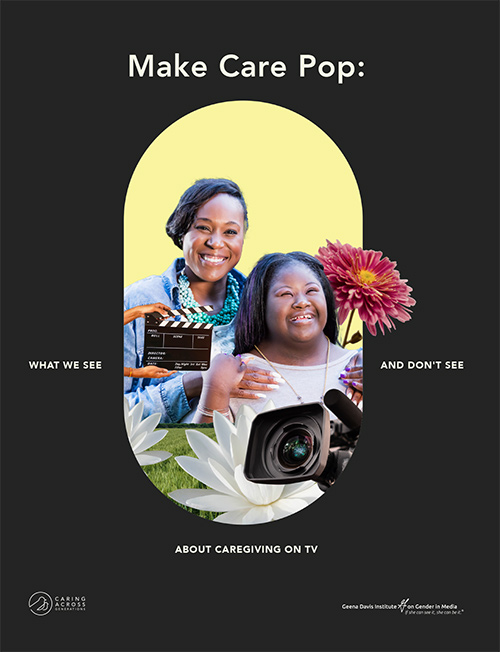
The report Make Care Pop, prepared by the Geena Davis Institute in collaboration with the organization Caring Across Generations, analyzes the representation of care in recent US television fiction.
The analysis of 608 productions reveals that these productions exclude numerous caregiver profiles, especially those linked to the care of the elderly and people with disabilities. The absence of these narratives contributes to those performing these tasks feeling invisible, isolated, and socially undervalued. Based on this data, the report aims to encourage screenwriters and producers to broaden and complexify the representation of care. A more complex reflection of demographics will represent and provide a more extensive imaginary of the tasks, their challenges, and solutions.
The study indicates that most plots related to care focus on parenting, predominantly represented by white women in heteronormative families. Common problems, such as economic challenges, the burden of care versus personal life and work, medication management, or bills to pay, disappear on screen. Public policies are practically not mentioned (0.01%), while the discourse of individual responsibility articulates the construction of 20% of these characters.
Among its recommendations are: making visible the care of the elderly and people with disabilities; diversifying profiles in terms of gender, race, and social class; incorporating the structural challenges faced by caregivers; showing the daily dimension of care work; and building aspirational role models that dignify these tasks.
that applies existing regulatory frameworks to prevent biases and operates under criteria of transparency, supervision, and human accountability.