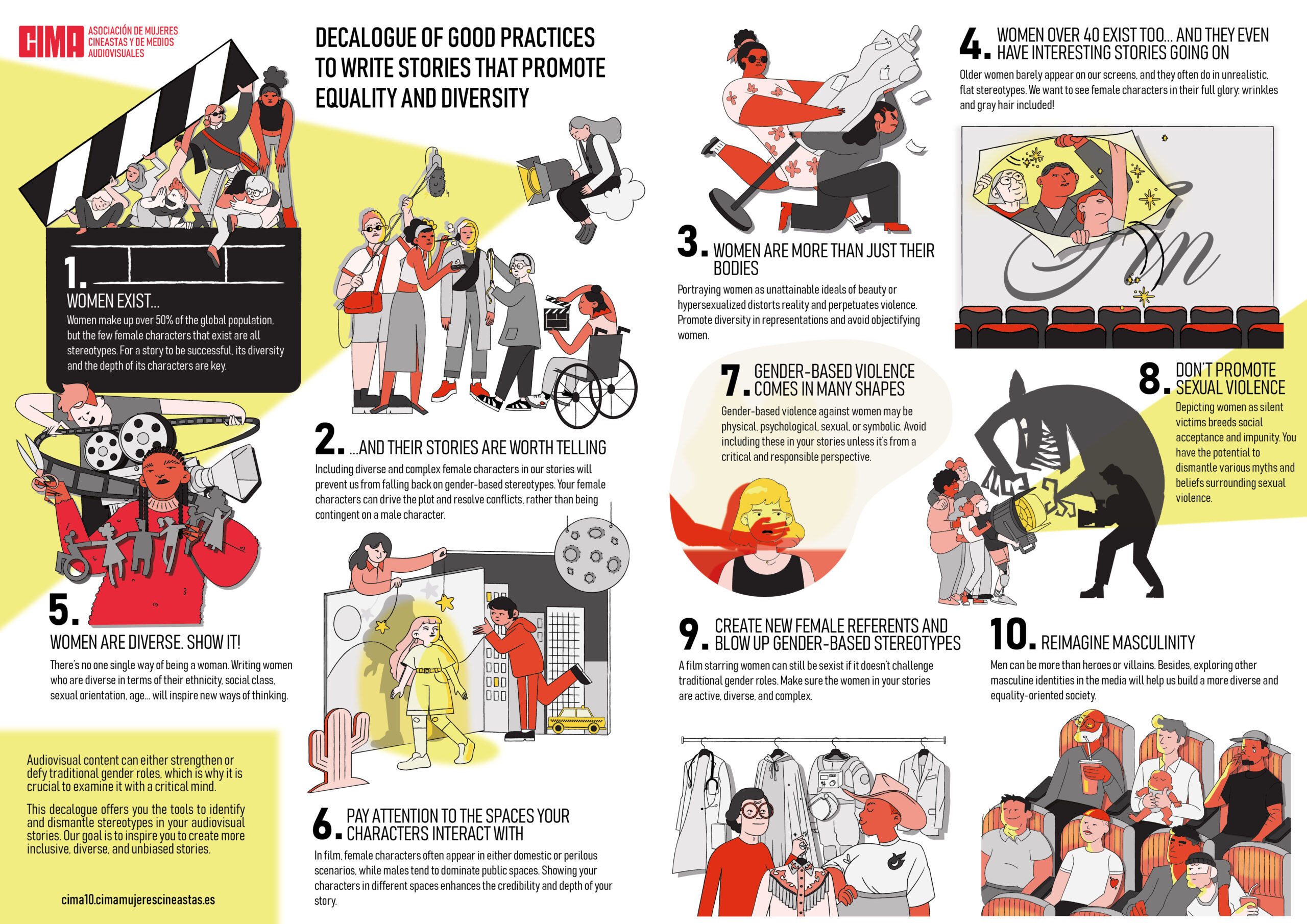
Aware of the importance of audiovisual language in shaping the imagination of young people, CIMA has promoted this Decalogue as a series of “tools to identify and dismantle the stereotypes present in audiovisual narratives.”
Following its first version in 2020, conceived by the CIMA members’ Education group with experts such as María Castejón, the Decalogue has been updated in 2025 with new illustrations by Ximena Ríos and diversity consultancy from Emilio Papamija, alongside the supervision of the CIMA team and board. Although this resource was initially aimed at the youth and teaching community, it is also useful for the general public interested in analyzing audiovisual content from a feminist perspective.
The Decalogue, available in several languages as well as in an illustrated version and a more extensive one, promotes a representation of women in all their complexities, diversifying the models depicted and expanding attention to different classes, identities, origins, and sensibilities. It proposes removing the pressure on female bodies, encouraging the representation of non-normative bodies, and including stories starring women over the age of 40. It also seeks to transform the representation of spaces associated with the feminine or sexual violence, fostering a questioning of the representation of the latter to “raise awareness, prevent, and change imaginaries” in society. The final point defends the importance of also imagining other male role models, where caregiving, attitudes, and conflicts show the complexity of real life, rather than stereotypes rooted in hegemonic masculinity.
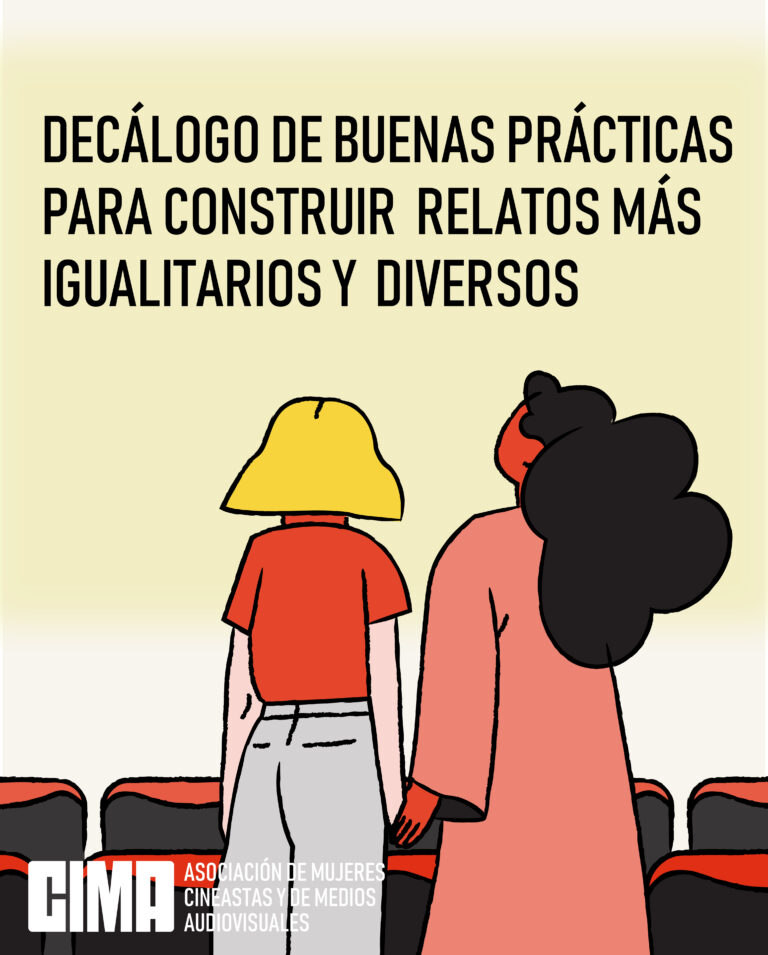
- Decalogue Information (Spanish)
- Summarized Infographic (English, Basque, Galician, Catalan, Spanish)
- Extended Format (English, Basque, Galician, Catalan, Spanish)