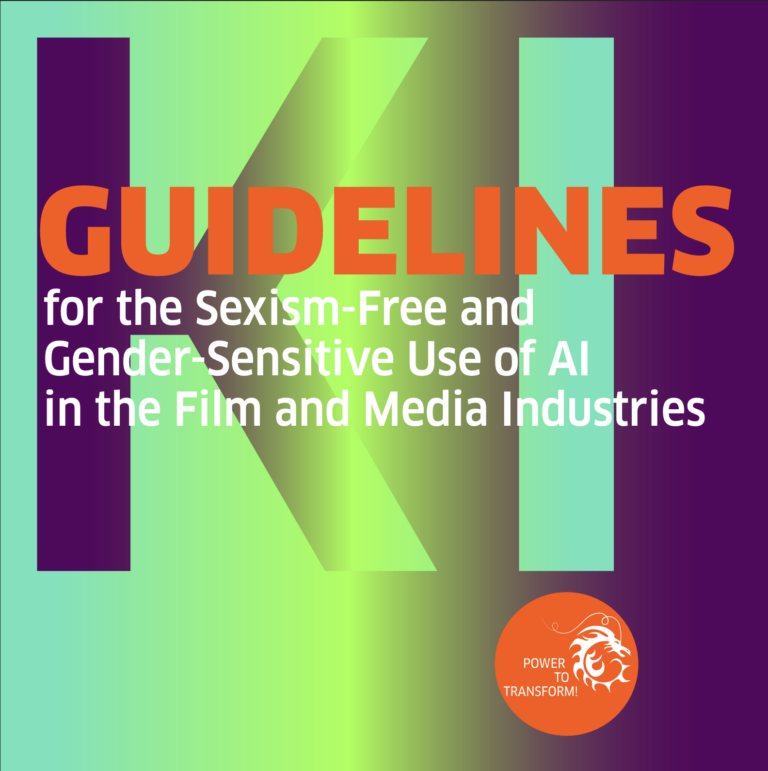
Artificial intelligence is already a reality that impacts our lives and the way we imagine the world. This Power to Transform guide, written by Elizabeth McIntyre and Barbara Rohm, analyzes the most frequent biases in generative AI, proposes strategies to address them, and outlines what to demand from technology companies to move toward more inclusive tools. It was presented at the Global Forum for Women Film Associations at Berlinale 2026 (available online here).
From the academic perspective of five experts, the consequences of biases present in generative artificial intelligence are examined. The guide analyses how hypersexualisation and the perpetuation of patriarchy are reflected in AI-generated productions, as well as the imposition of normative body standards, the erasure of queer identities, and the lack of representation of minority, Indigenous and cultures. Based on this diagnosis, the guide proposes ways to challenge this conservative vision and to demand technologies developed from diverse, safe and supervised positions.
Generative artificial intelligences reflect the world that has been provided to them as a reference. For this reason, their outputs require a critical perspective. To this end, the guide includes a practical section on formulating gender-aware generative prompts that take account of discrimination dynamics, anticipating and mitigating biases from project assessment through to audiovisual promotion. This prompt guide is accompanied by various tools to strengthen the critical evaluation of generated responses, in order to identify clichés, omissions and discriminatory patterns.
The text concludes that artificial intelligence, as it is trained today, reproduces structures of patriarchy, racism and sexism present in the archives that feed it. In response, it sets out the need for AI developed from principles of equity, that applies existing regulatory frameworks to prevent bias and that operates under criteria of transparency, oversight and human accountability.